Note: None of this is useful in practice in the absence of proper medical diagnosis and on-going treatment by a professional.
For us with ADHD, 2020 proved to be an interesting year. One where I think many came to realize that working from home actually has several benefits in managing symptoms if one takes the time to focus on it. One of the most difficult challenges with ADHD is that management is heavily reliant on controlling your surroundings and externalizing a lot of functions. Thus, the space around you is an important tool, and working from home gives you rich ability to create a work environment that works with you instead of against you, as so many corporate offices do.
But in managing symptoms of ADHD, we run into a few observations that appear to be paradoxes. Understanding why helps us also understand how to better manage the day to day issues:
- How sensory stimulation, or lack thereof, can lead to both sensation seeking behavior (Restlessness, hypersensitivity to stimulation), and hyperfocus (The shutting off of external stimulation)
- How sensory stimulation is both something to avoid but also something necessary to remain in control of your focus
Sensory management challenges
The most perplexing of all things about how the ADHD brain handles sensory input and what motivates it. ADHD leads to seemingly contradictory behavior in people. For the purposes of understanding, we can split it into 2 clusters of behaviors and symptoms:
Cluster 1 – Sensory filtration and overload
- You can have a hard time “filtering” stimulation out. Background noise that others do not notice will distract you. (Sensory gating issues)
- You can be sensitive to sensory stimulation, which can lead to sensory overload. Excessive noise will make you annoyed, tired, and hurt. (Sensory over-responsivity)
Cluster 2 – Sensation seeking
- You will seek out stimulation actively of different kinds. Failure to do so will leave you restless. (Sensation seeking)
On the one hand, we see that your brain has a hard time dealing with sensory stimulation under many circumstances. Yet, the brain seeks our stimulation and novelty. This is especially observed in the primarily hyperactive presentation. They will especially be prone to be “adrenaline junkies,” always seeking out the next risky behavior to engage in.
Stressful situations are a double-edged sword for somebody with ADHD. Stress acutely releases norephedrine and dopamine, which are otherwise believed to be deficient in the frontal cortex in ADHD. This leads to the common observation that ADHD individuals will often perform very well under stress. Though it can’t be stressed enough, stress for any sustained amount of time is detrimental to one’s health.
How the senses calibrate themselves
In the most unscientific of explanations, we can think a bit about what goes wrong if we think about how a dynamic range compressor works, whether it’s the one used by musicians or on your Zoom/Webex/Hangout that ensures that everybody is roughly at the same volume. The system works roughly like this at any given time.
| Compressor | ADHD impact | |
| Attack phase | If it senses a spike above a certain threshold, it will decrease the input’s gain (volume). | Requires significant volume to trigger any limiting behavior. |
| Release phase | Once the volume subsides, it slowly starts to increase the gain again. | After the volume subsides, the rate at which the gain is increased again is slow. |
You’ll have experienced this system often. For instance, when you turn on the light after being in the dark for a period of time, if you hear a loud sound after being in a quiet place or experienced sensory deprivation.
This also serves to explain the paradox that is the issues of hyper-focus in the case of ADHD. Some things will stimulate a person much more than others, often leading to “flow.” This will often lead to hyperfocus, where you are exposed to an input that really stimulates your brain, decreasing the gain on everything else. When reality calls and you have to switch task to something else, you find yourself numb and unable to switch context no matter how hard you try. Your compressor needs a reset to move on or given enough time to go through the Release phase to get back to a baseline where you can function normally again.
However, if you find yourself without sufficient stimulation of your senses, your brain will look for it. It increases the gain until it’s “satisfied.” This means that your brain is prone to start to enjoy stimulation from any external source it can find. Random noise from the street, people talking in the background, or the clock’s sound on the wall ticking away. This leads to distractions that you have a hard time controlling.
Self-managing the senses
With the above understanding of how the brain modulates senses, we can derive tactics to control the downstream effects of external stimuli. We understand that your senses’ insufficient stimulation will lead to sensation seeking behavior while pushing the stimulation too hard will numb you and make you more likely to hyperfocus (Which is not positive in most circumstances).
Outlined below are my favorite tools for managing stimulation to avoid being hijacked by things outside of my control. If we avoid the “low stimulation” state, we can retain more control.
Auditory
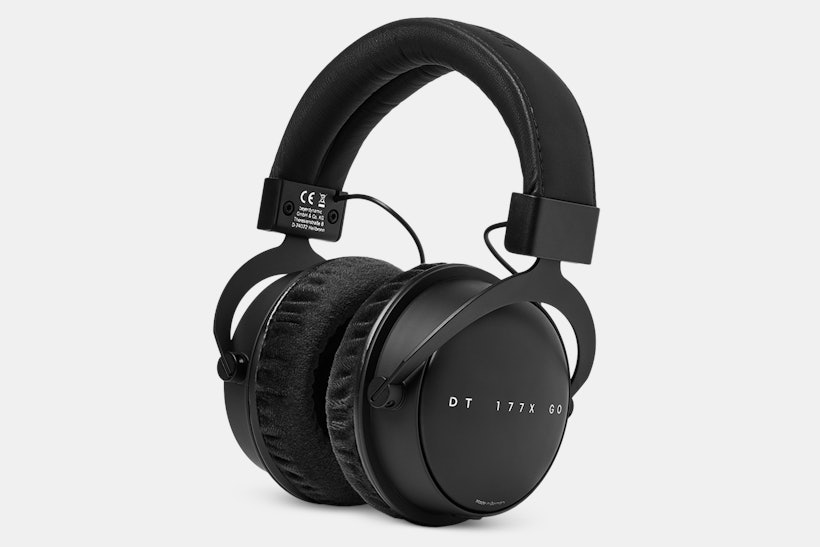
By far, one of the most magical things is that of the auditory system. With modern audio gear, we’re able to entirely control it. In day-to-day life, I find this to be one of the most impactful things I can do to remain in control.
Using high-quality closed-back headphones (I.e., has high attenuation of outside noise) allows you to slip into a different dimension. Listening to your favorite album will give the brain stimulation it craves while still being “predictable” enough that it itself doesn’t hijack your focus. I find that task focus improves greatly while listening to music and greatly suffers when I do not. It’s a night and day difference that I have to remind myself of quite often. It really is a stark contrast.
A word of warning on Active Noise Cancelling (ANC) headphones: They can also work really great, especially if you find yourself in a location where you can not control the noise around you. The ANC’s quality is critical, as some headphones will cause a low-pressure sensation on your ears, which is not comfortable for very long.
White noise (Such as from a fan) is also widely recognized as being efficacious. I find it especially useful for sleep, where it serves dual purposes:
- It provides a “baseline” of stimulation/sound for the brain to ensure it start seek auditory stimulation. See: Neuropsychological and neurophysiological benefits from white noise in children with and without ADHD
- White noise can in effect “shield” you from other noise.
Tactile
Seeing how people control their tactile stimulation (Feel/touch) is really interesting. Sufficient to say, everybody is different. But tactile stimulation makes thinking far easier for me. The absence of such can make thinking fairly difficult.
I personally have a mixture of things on my desk to fidget with. This includes guitar picks (Dunlop Primetone is the bomb), Begleri, and other things with a nice texture and can be fidgeted with. You can find a million options on Amazon, and they are always rather cheap. A few words of warning, though:
- Switch up what you fidget with. If I utilize the same thing to fidget with for too long, it can start to cause neuropathic pain, especially if the item is not soft.
- Pens are great and tend to be my fallback option. But I avoid them if I can. As a teenager, my mother banned me from touching pens at home, as it became difficult to find working pens in the house. As it turns out, when you fidget by splitting apart pens and then get distracted by something, you end up with a pen graveyard. Springs and other bits go missing really easily if you’re not paying attention!
Heavy clothing, such as hoodies, is also amazing for many reasons. Heavy clothes stimulate the production of serotonin, leading to an anxiolytic effect. Weighted duvets are magic for insomnia.
Visual
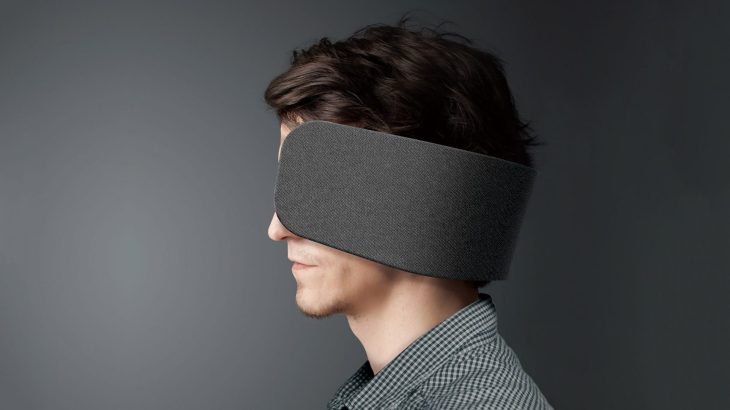
Visual stimulation can be a really tricky one to manage. It ties heavily into the auditory senses for me, where I especially have a hard time filtering out the noise, which I can’t see where the noise comes from. Say I’m sitting in an open-plan office with people speaking behind me. This type of setting is truly torture.
Having the ability to control your immediate environment is key here. If you find yourself unable to have a private office (Or at least in a relatively small room, even if it’s shared), I find myself always preferring to sit towards a corner, looking out into the room. This reduces the surface of stimulation and makes it easier for the brain to reconcile where the noise comes from.

 Charlie's blog